
Mixed-Media Grid Collage
For this week’s Handmade by Gather project, we’re continuing our exploration of paper by jumping into collage! Making a collage is a simple, fun art activity for all ages; everyone will enjoy working with color and texture to create something interesting. Collages are also wonderful because they don’t require many supplies—you can use whatever paper and bonus materials you have lying around!
To spice things up a bit, we’ll be expanding upon a classic collage with a mixed-media grid collage. The concept is the same, but you’ll use variety of materials beyond paper and draw a “grid” (boxes or other shapes) that divides your paper into multiple sections, allowing you to make multiple collages in one! This project is a great opportunity to get rid of some scraps while flexing your creativity.
This blog presents a collage that can be done by all ages, with slight modifications for younger children. Of course, any collage can be modified to better fit the artist.
We’ve done basic collages using scissors, paper, and glue with children as young as three, to great success! Kids love exploring how separate images, textures, and colors can come together to form a new piece. Working with scissors and glue sticks is also a great chance for children to develop or hone their fine motor skills! For younger children or those who may not yet be ready to use scissors, ripping paper is a great option that still strengthens those skills and leads to a fun project. For those who aren’t ready for glue, you can use contact paper as the base of the collage.
Below, you’ll see examples of collages made by children ages 5 and 7 as well as by adults. We can’t wait to see what you create! Share your collage by tagging us @gather.make.inspire.
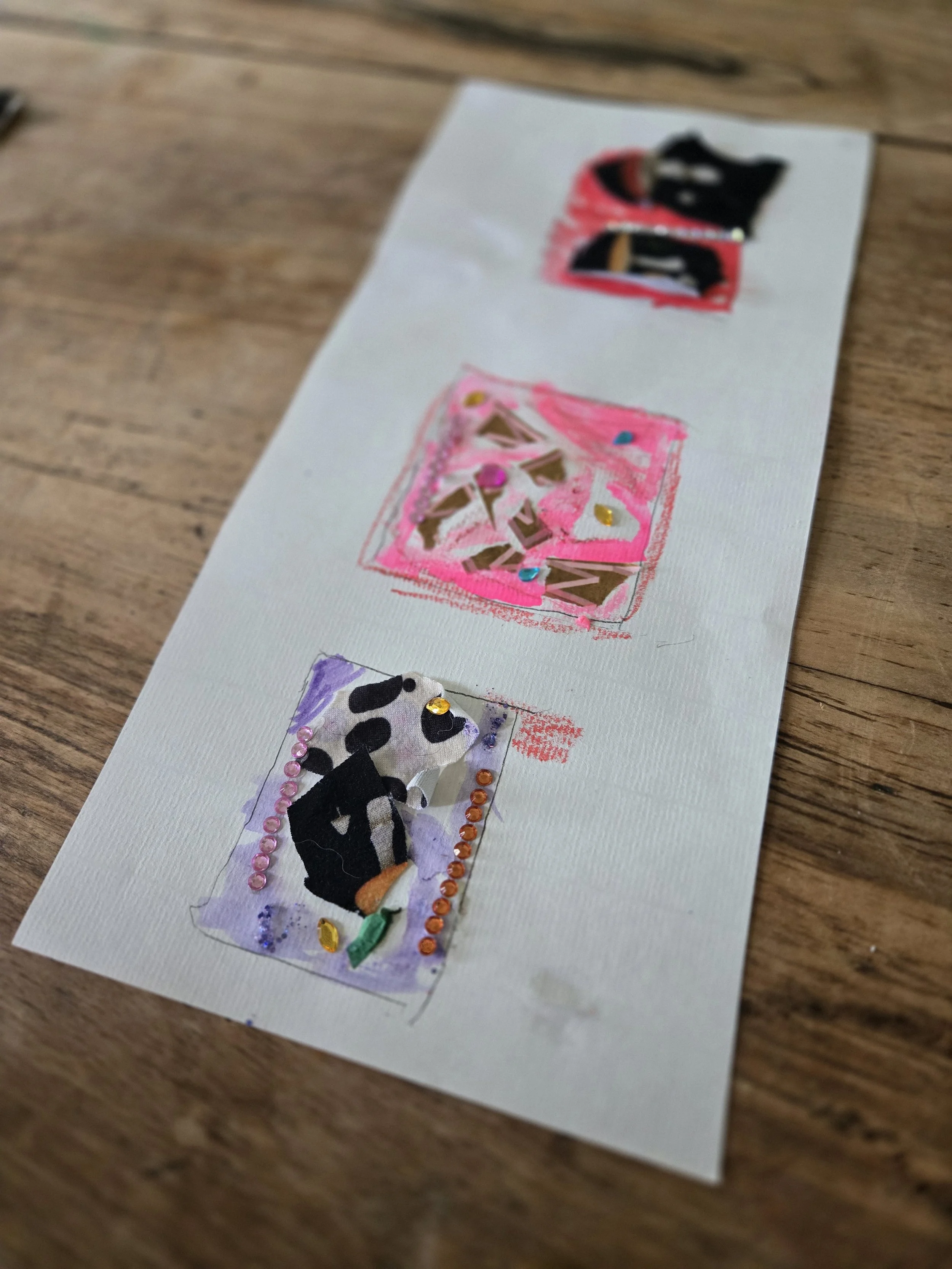
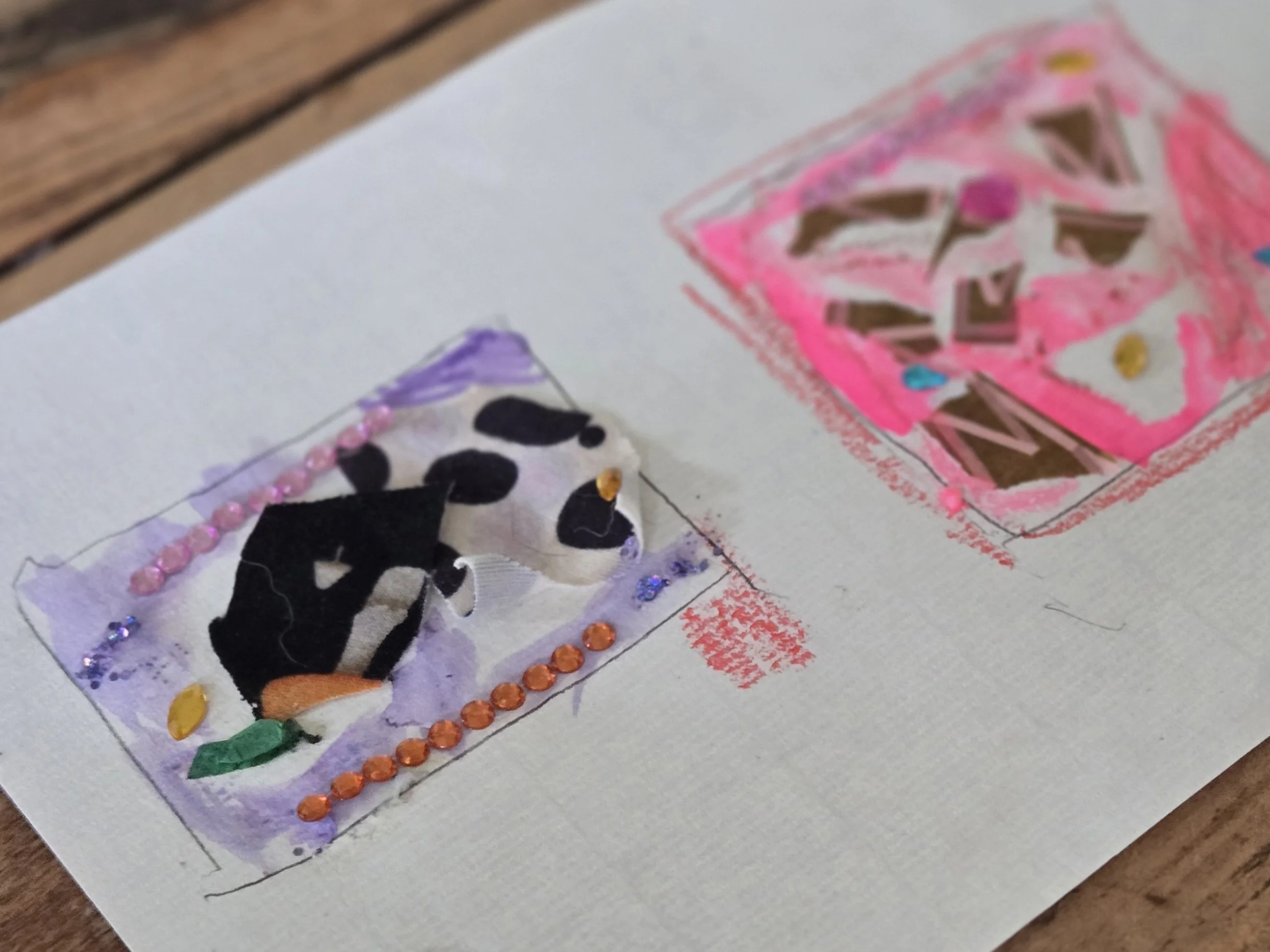
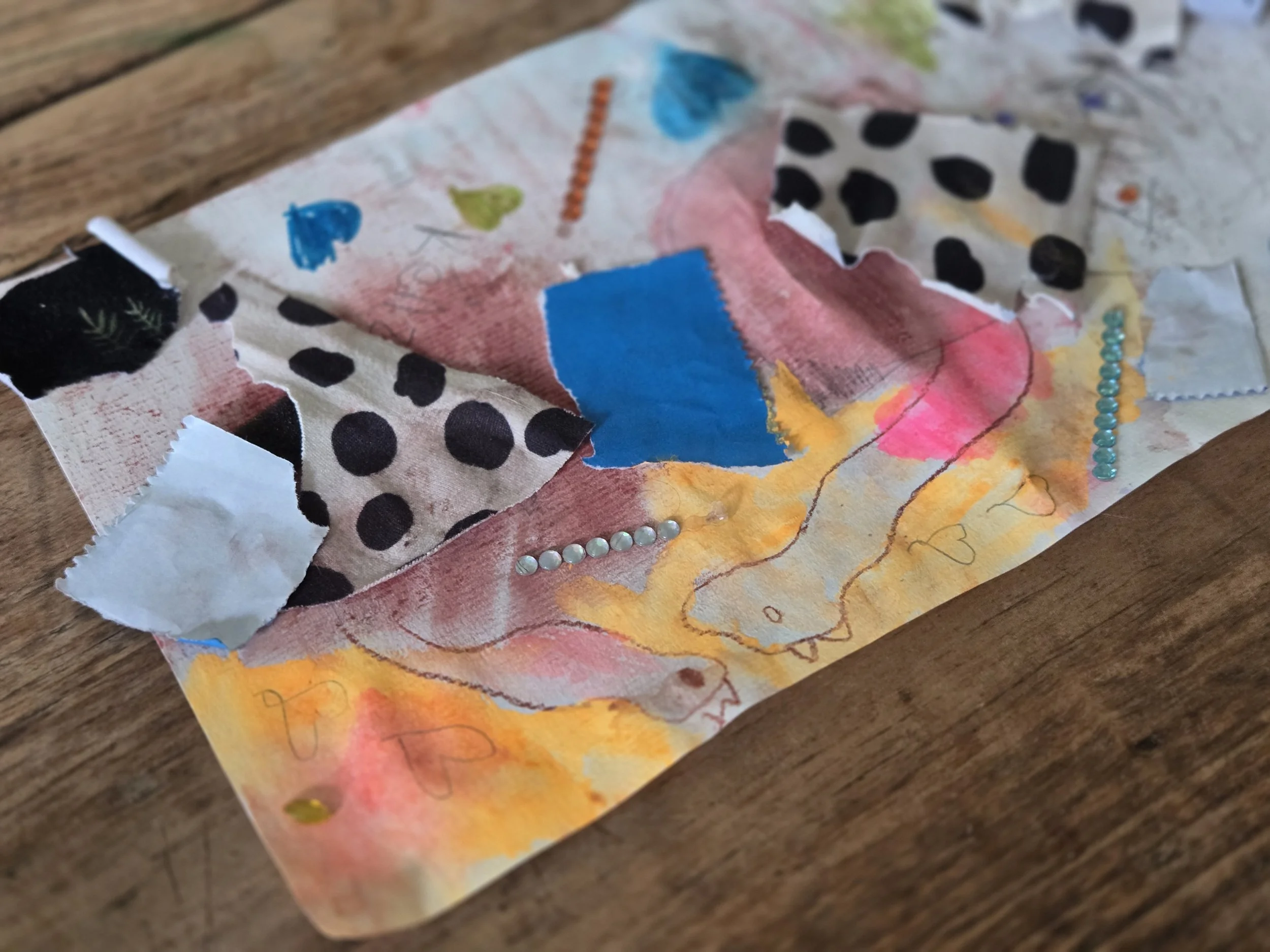
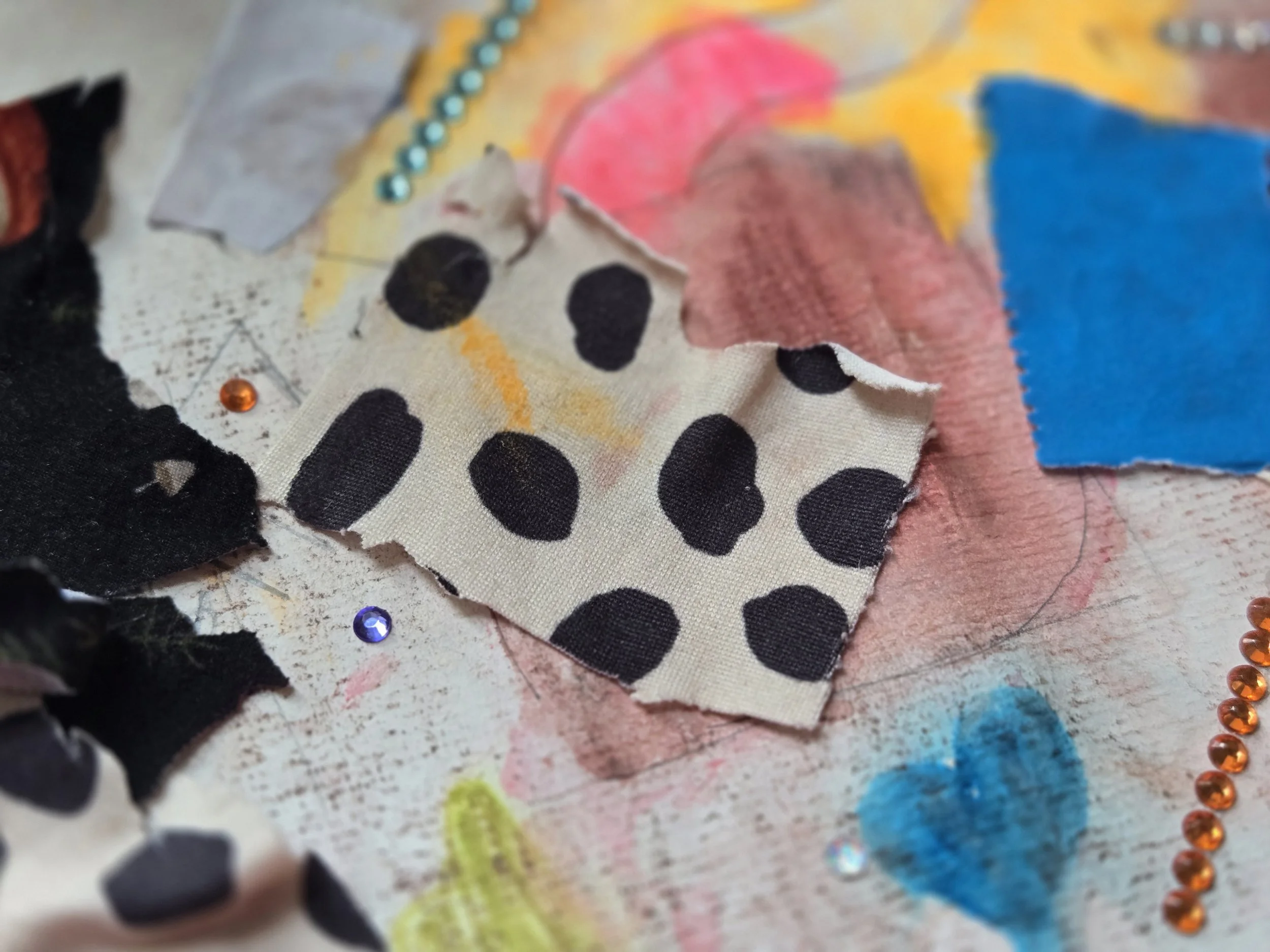
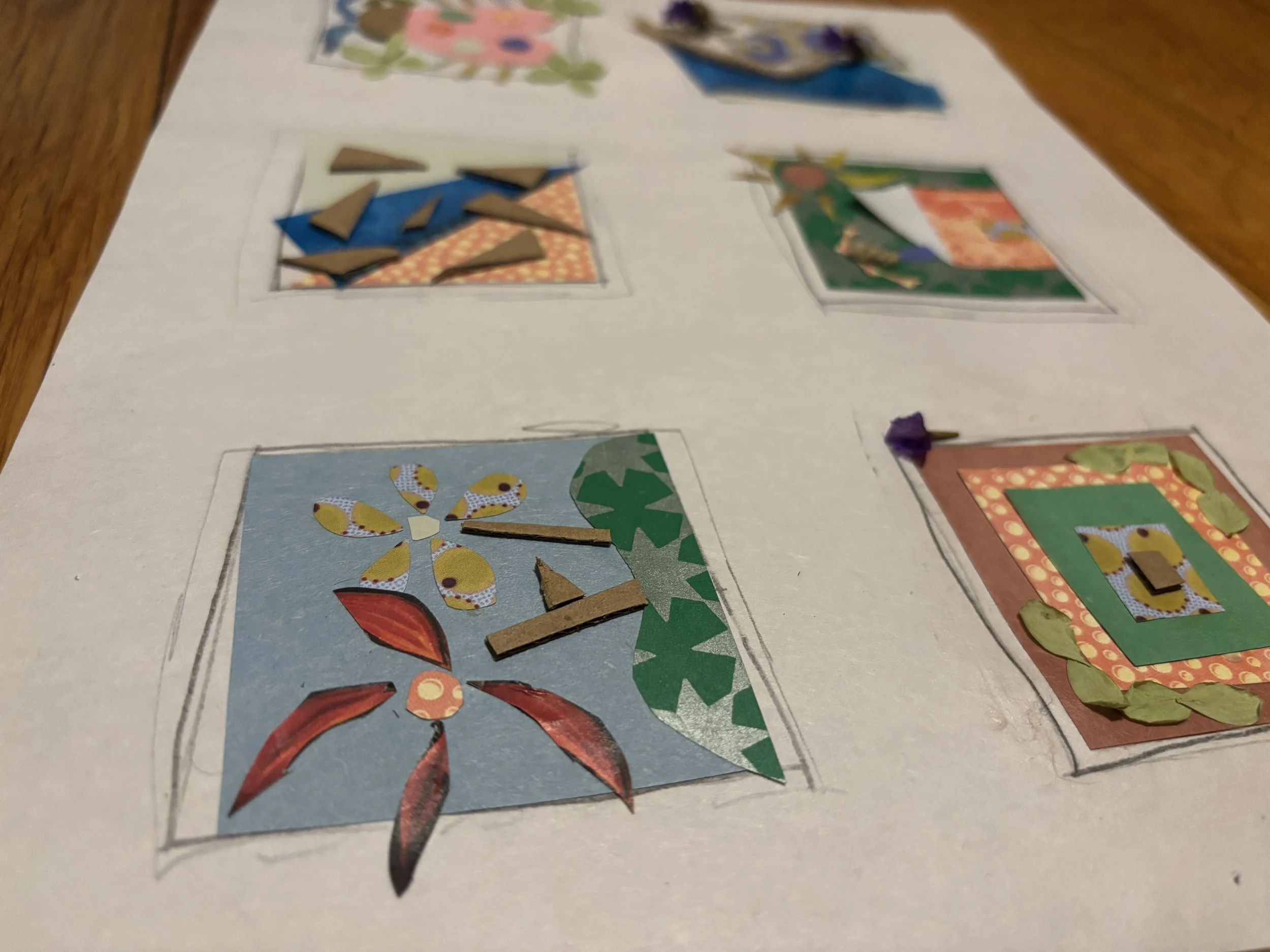
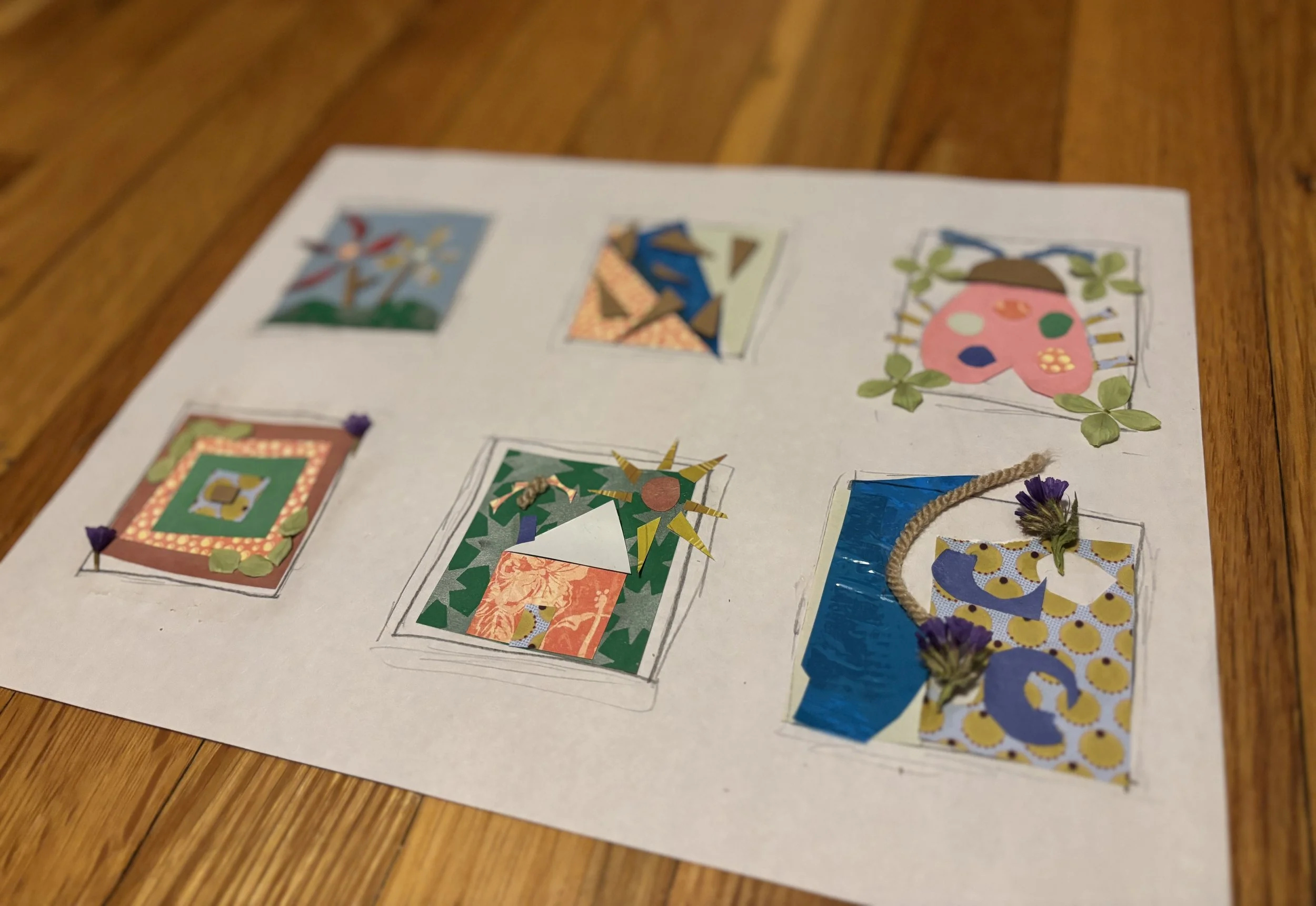
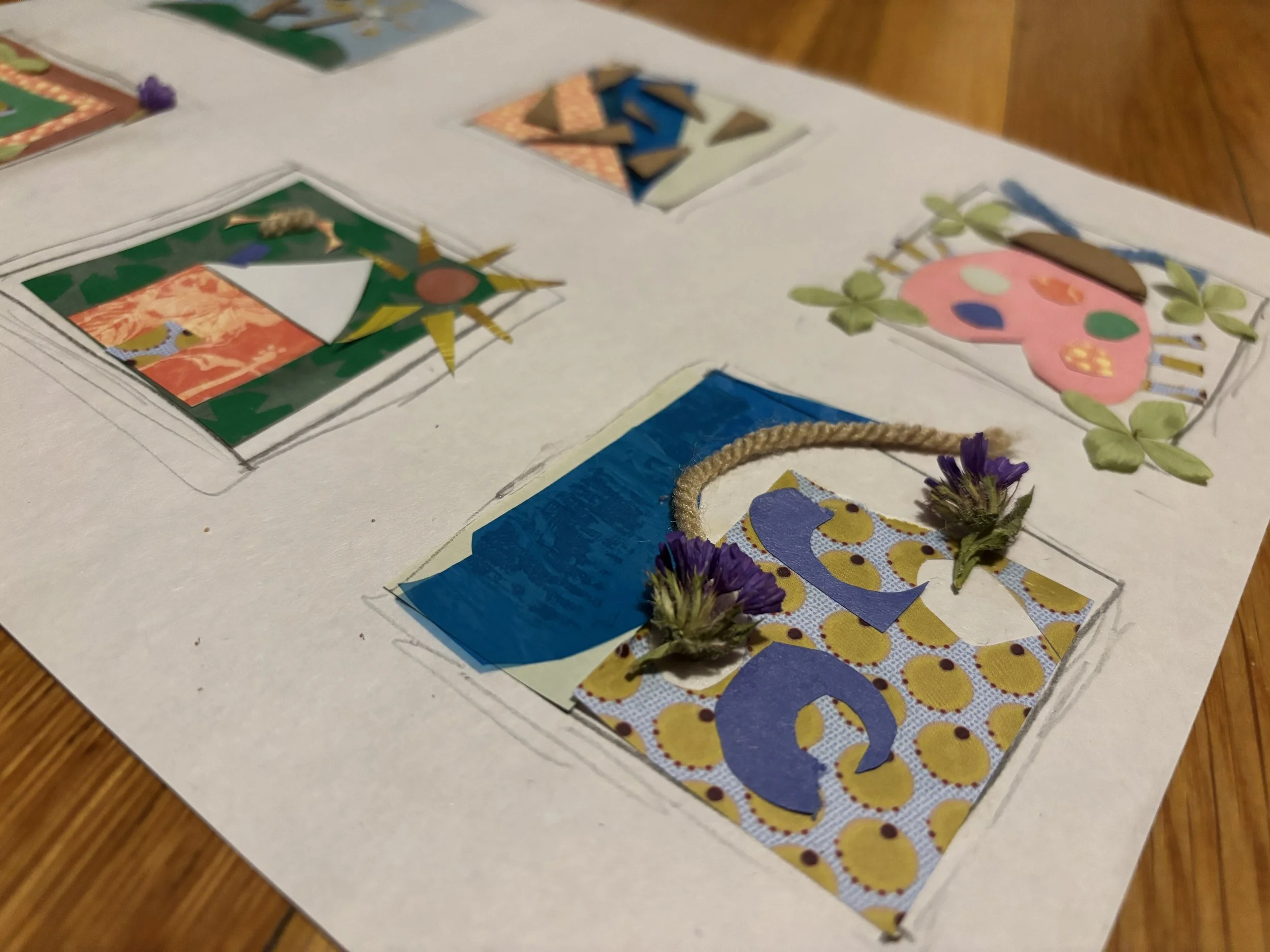
-
One paper to serve as the collage base
Different types of paper for other collage elements
white paper, textured paper, tissue paper, scraps, wrapping paper, construction paper, magazines etc!
Any other materials you want to incorporate. Think yarn, ribbon, recycled or found objects, dried flowers, buttons, fabric scraps, sequins, markers/crayons/colored pencils, paint, cardboard.
Pencil
Ruler (optional)
Glue (we used a glue stick)
Scissors
Modifications:
If working with young children, you may want to let them rip their paper rather than using scissors. You can also use contact paper as the base of your collage if a child is not yet ready for glue.
-
Gather your materials.
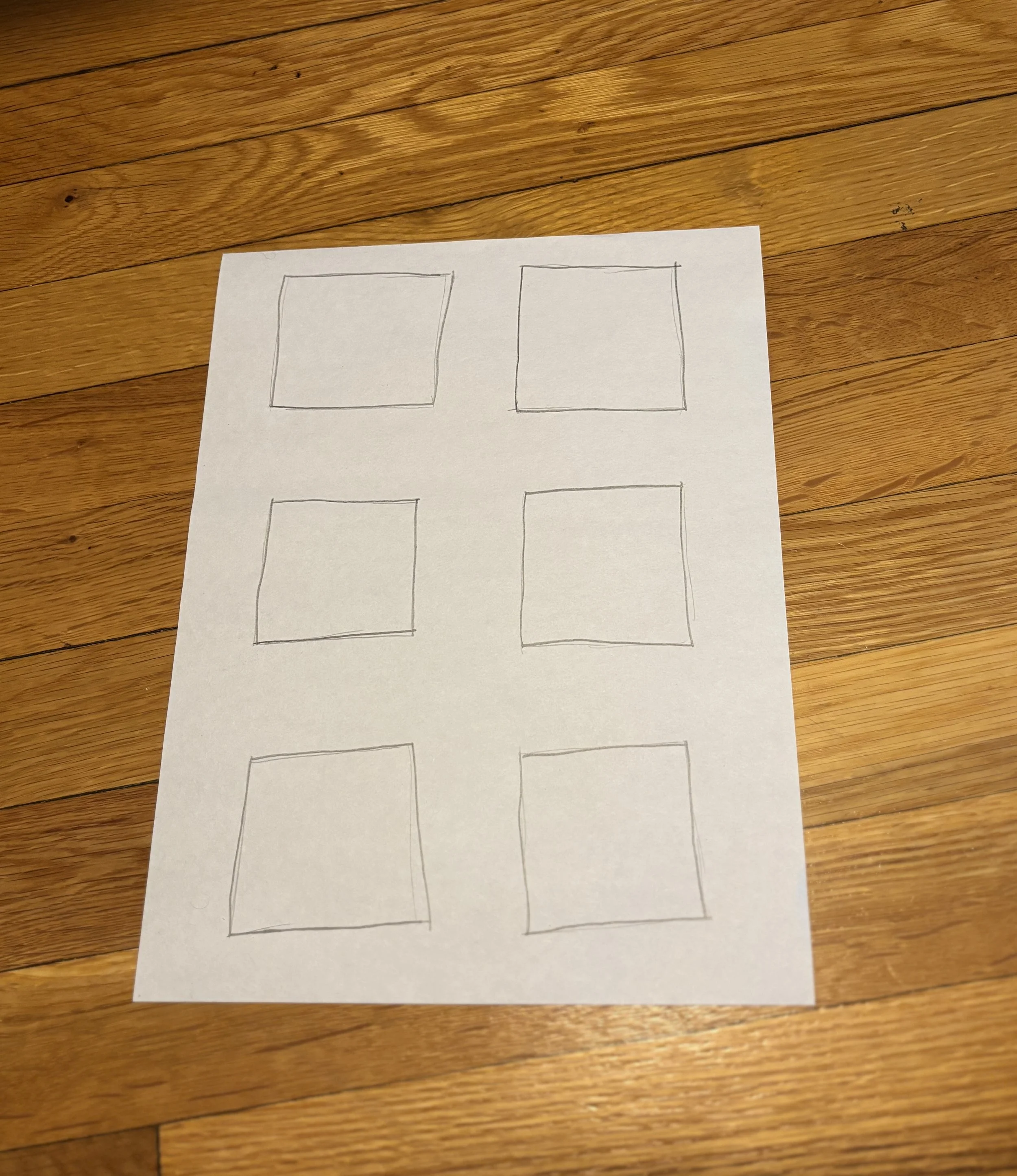
On your base paper, draw at least two boxes (or any shape you prefer), dividing the paper into multiple sections. The more sections you add, the more mini-collages you’ll have.
If using contact paper, tape the contact paper sticky-side-up on a hard, flat surface.
-
For yourself:
Choose a base paper.
Draw your grid.
Cut out images, patterns, shapes, etc from the available papers.
Arrange your cutouts in a way that looks good to you. You can make the design as complex or simple as you like—making a scene or just adding cutouts you enjoy! Layering different materials is always fun!
One by one, glue each cutout where it belongs.
Repeat until each of your sections has been filled.
For a child:
Assemble the available materials in a way that is accessible to the child.
Briefly explain/demonstrate how to collage.
Child chooses their base paper/you give them a base paper.
Help the child draw their grid sections, or give them a paper with pre-drawn sections. For children, we recommend 2-4 sections.
Child cuts out/rips images, patterns, shapes etc from the available papers.
Child glues or sticks their cutouts onto their base. They can also pre-arrange their cutouts as in the above steps, but younger children may also prefer to attach their cutouts as they go rather than at the end.
Repeat until all sections are filled.
-
Many children’s books use collage as a part of their illustrations! To take this project deeper, try adding a story time and reading a picture book that incorporates collage. We recommend Frederick by Leo Lionni and The Mixed-Up Chameleon by Eric Carle.
Children may also enjoy creating a collage that tells a story, or making up a story based on their collage. (Adults may enjoy this too!!). You could create a scene in each of your grid sections that come together to tell a story.
Add a theme to your collage! Try making a collage that’s all one color, or about a certain setting or idea.